1975 Sexist OSU Newsletter
The Old Man, the newsletter of the Ohio State University Men’s Rugby club announced the formation of the Ohio State women’s team. Note the graphic illustration of a female player.
1977 The Pitch
The Tube and the Pitch, two different Ohio State Women’s team newsletters from 1977 show the grassroots organizing, bawdy nature of women’s rugby at the time.
Support us today!
When you contribute to the U.S. Women’s Rugby Foundation you become part of a movement to support girls and women involved in rugby.
We are a 501(c) (3) non-profit organization.
All donations made are tax deductible.

Support us today!
When you contribute to the U.S. Women’s Rugby Foundation you become part of a movement to support girls and women involved in rugby.
We are a 501(c) (3) non-profit organization.
All donations made are tax deductible.


2000-2009 was a busy decade for women’s rugby. In 2003, Kathy Flores was named head coach of the USA Women's Rugby Team. She led the program rom 2003 to 2010 and was the head coach of the 2006 and 2010 U.S. Women's World Cup Teams. Kathy Flores became the first woman to serve as the Head Coach of a National Team; Anne Barry was two years into her reign as the first female President of USAR; the U.S. 7s Team came into being and Julie McCoy became the first woman to serve as the Head Coach of a National 7s team; the dream of varsity collegiate rugby was realized and the Women’s Premier League was organized.
In 2006, Wendy Young started Your Scrumhalf Connection as a blog. In the ensuing 20 years YSC has grown into one of the most respected news sources for women’s rugby.

Wendy has branched out in broadcasting. In 2006, Wendy Young started Your Scrumhalf Connection as a blog. In the ensuing 20 years YSC has grown into one of the most respected news sources for women’s rugby. Wendy has branched out in broadcasting. Wendy Young began her rugby writing career in 2006 when she was playing with the University of Oklahoma rugby team. At first her writing was on a blog called WRFU - Women’s Rugby, in 2008 she rebranded to a new website that was
focused on covering international women’s rugby titled Your Scrumhalf Connection. In her thirteenth year, the site again transformed and now curates women’s rugby stories from across the globe with a focus on large rugby events.


The early 2000s belonged to women’s college rugby. After years of struggle, collegiate women’s rugby came into its own as a sport; one high school and youth players could aspire to play in college.
2002: Women’s rugby is added to the NCAA Emerging Sports list. Singling out women’s rugby out over men’s rugby created some difficult conversations in the rugby community. However, collegiate men's football programs - often boasting rosters of over 100 players - created an insurmountable obstacle for the elevation of men’s rugby. Athletic directors recognized that women’s rugby could bring valuable Title IX numbers to schools and would be one of the first contact sports for women.

In 2002 Eastern Illinois University elevated the club women’s rugby program to varsity status under the direction of Frank Graziano. The first collegiate varsity program in the US. Eastern Illinois would dominate collegiate rugby for a number of years before falling victim to a lack of administrative support from the EIU athletic director. The program produced a number of great players like 2016 and 2024 Olympic Captain Lauren Doyle as well as, Becky Carlson the founder of NIRA and Head Coach of Quinnipiac and Michelle Reed, Head Coach of Sacred Heart.
In 2003, Bowdoin College in Maine, elevated their women’s program to varsity, under guidance of long-time Head Coach MaryBeth Mathews. Arguably the most successful D3 program in the country for over 25 years, Bowdoin has won a number of D3 NIRA 15s Championships and in 2025 won the

inaugural D3 7s Championship. Bowdoin has produced a few National Team players, most notably Farrah Douglas. Coach Mathews was instrumental in the development of NIRA and developed the first rugby camp for girls (Polar Bear Rugby Camp). MaryBeth stepped down in 2023, the program is now in the hands of Head Coach Laura Miller.
In 2004, Southern Vermont University became just the third varsity program in the country. Unfortunately SVU dropped rugby in 2006.
In 2004, Norwich University elevated their successful club program to NCAA varsity status. Norwich, under the leadership of Austin Hall, became a powerhouse, winning six, D3 National Championships. Most notably was the 2013-14 team,

with a record of 40-0, including the USA Rugby College 7s National Championship, the ACRA Division I National Tournament 15s Championship, and the ACRA 7s National Championships. In 2024 Norwich repositioned themselves as a NCR D1 program.
West Chester University became the first NCAA Division II women's rugby program in the country in 2004. West Chester, has been under the guidance of Tony DeRemer for over 20 years. Like Bowdoin, that coaching stability allowed the program to become a model for collegiate programs.
Sept 15, 2007, Eastern Illinois v West Chester was the first, women’s intercollegiate varsity game.
In 2010, Quinnipiac University in Connecticut added women’s rugby as a D1 varsity program. It was the first program to begin ‘from scratch’ as Quinnipiac had no club program to elevate.
In 2013, Harvard University elevated their successful club program to varsity status.
In 2014, the U.S. Military Academy and Brown University elevated their women’s programs to D1 varsity and American International College elevated their program to D2.


In 2015, National Collegiate Women's Varsity Rugby Association (NCWVRA) hosted the first championship. Quinnipiac University defeated Army 25-22 to win the championship.
2015: NCWVRA changed its name to NIRA


In 2015, Dartmouth College and Sacred Heart University elevated their teams to D1.
The University of New England became a D3 varsity program and Central Washington University, D2. Eastern Illinois University dropped their women’s program.
In 2016, Notre Dame College and Molloy College elevated their programs to D2, and Castleton College elevated their club program to D3.
In 2017, Mount St. Mary’s College became a D1 program, Long Island University, Post College and Queens University became D2 programs.
2018: Central Washington State University dropped out of NIRA and returns to club status.
2019: NIRA moves from a Tier system to NCAA Divisions Competition (D1, D2, D3)
The National Small College Rugby Organization (NSCRO) was founded in 2007. NSCRO would become National Collegiate Rugby Association (NCR) the world’s largest collegiate rugby organization, serving programs across all divisions. The evolution and success of NCR has led to a long standing feud with USA Rugby culminating in a 2025 lawsuit filed by NCR.
The National Small College Rugby Organization (NSCRO) was founded in 2007. NSCRO would become The 2002 D1 Collegiate Championships may go down as the most competitive championship of all time. Played in cold, windy conditions in Blaine, Minnesota, four teams: Navy, Air Force, Penn State and the University of Illinois squared off with no team willing to break. Collegiate Rugby Association (NCR) the world’s largest collegiate rugby organization, serving programs across all divisions. The evolution and success of NCR has led to a long standing feud with USA Rugby culminating in a 2025 lawsuit filed by NCR.
Laura Murphy captured the match for Rugby Magazine, June 2002. In the first semi-final, Penn State defeated Navy 17-14, stealing the win in the final seconds of the match when PSU wing Leah Ackerman streaked her way down the sideline to score with no time remaining. Her score broke Navy’s heart and sent Penn State into the finals against Air Force.
Air Force made it into the final by defeating a tough Illinois team 7-5 in overtime. The match was a low scoring defensive struggle. It’s difficult to imagine, but the match ended 0-0 in regulation time. The first score of the game came in the final minutes of the first overtime when Illinois’s outside center scored to give the Illini the lead. But with less than two minutes left in overtime, the Air Force scrumhalf powered over the line to tie the match. The Zoomies were able to convert and take the win over an exhausted and heartbroken Illinois team.
The final was yet another close match as Air Force came back in the second half to defeat Penn State 12-7. In all three matches, the wind was a significant factor, as teams playing against the wind tended to find themselves bottled up in their own end for much the half. PSU scored in the first half off a driving lineout and was able to convert the try to lead 7-0. In the second half, Penn State was forced to deal with the wind and played much of the match in their own half. Air Force was able to score twice to take a 12-7 lead and hang on to win their second national championship.
The game was a defensive battle, and a tactical battle. Every play, every set piece, was crucial. Penn State, playing with the wind and up a player due to a yellow card, put lock Stacy Jones over for a try, converted by Meghan O’Melia, and led 7-0 at halftime.
With the wind in the second half, Air Force was able to put lock Tiffany Williams over to make it 7-5. Still Penn State held onto the lead. But No. 8 Erin Harms took a quick tap on a penalty and scored with 12 minutes left. Adrianna Vonderbruggen converted, and Air Force led 12-7. There followed a torrid final period in which McDonald helped earn her MVP award with her defense and leadership.


Collegiate Champions 2000-2009:
USAR D1
2000: Penn State v Princeton University
2001: Chico State (Cal) v Penn State
2002: Air Force Academy v Penn State
2003: Air Force Academy v University of Illinois
2004: Penn State v Princeton
2005: Stanford University v Penn State
2006: Stanford University v Penn State
2007: Penn State v Stanford University
2008: Stanford University v Penn State
2009: Penn State v Stanford University


USAR D2
2000: Plymouth State University v East Stroudsburg University
2001: Northern Iowa University v University of Nevada
2002: Northern Iowa University v University of Minnesota
2003: University of Dayton v Northern Iowa University
2004: Temple University v Providence College
2005: Providence College v Temple University
2006: UC Santa Cruz v Plymouth State University
2007: Iowa State University v UC Santa Cruz
2008: Shippensburg State University v University of Minnesota Duluth
2009: Shippensburg State University v Stonehill College

NSCRO Small College
2007: Stonehill College V Marist College
2008: Bryant University v Gettysburg College
2009: MIT v East Stroudsburg University


The 2002 Women's Rugby World Cup was the second World Cup sanctioned by the iRB. The tournament was held in Barcelona, Spain. Sixteen nations competed. Fourteen of the sixteen teams taking part were the same as in 1998 but two lowest ranked European teams (Sweden and Russia) were replaced by teams from Asia (Japan) and Oceania (Samoa).
The competition took place May 13-24. New Zealand defeated England 19-9 to claim a second consecutive title. The U.S struggled, losing to France and Australia early on but rallied to beat Spain for a seventh place finish. 2002 was the fourth World Cup for Hall of Fame player, Patty Jervey and the first World Cup for future Hall of Fame player, Phaidra Knight. The U.S. was represented at the Tournament by USAR President Anne Barry, the first woman to lead USAR and the first woman to lead a national governing body.


In 2002, the first U.S. U19 girls team was chosen. February 2003 the U.S. plays Canada and Wales U19.


In 2003, Kathy Flores was named the Head Coach of the U.S. Women’s National Team. She led the program from 2003 to 2010, and was the Head Coach of the 2006 and 2010 U.S. Women’s World Cup Team. Her appointment was unprecedented. She was the first woman and the first woman of color to be the head coach of any women’s national rugby team.
At the time, compensation for coaches and players was rarely discussed. It was assumed that USAR coaches working with women’s teams would work for little or no pay. While Kathy had the resume and experience to lead, her pay was embarrassingly low. What little she made she put back into the program supporting staff and players. As Assistant Coach Candi Orsini notes, For the 2006 World Cup I was not paid but my travel was paid. For the second, 2010 World Cup, I had to reapply for my job, and I was paid a stipend of approximately $5000 plus travel. I recall Kathy was paid around $20,000. We were fortunate at the time to have Anne Barry’s protection. She made sure we were in the conversation.
On the other hand, male national team coaches at the time were well compensated. Orsini notes, I believe during this time Eddie O'Sullivan (Head coach of the men's national team) was being paid $300,000. I’m not sure about his assistant coaches. The men stayed in nice hotels, the women stayed in university dorms and military bases. While the male players were not compensated by USAR, they did benefit from booster clubs who contributed to coaches salaries, awarded stipends and gifts to both players and coaches.
The situation was even bleaker for those coaching at other levels. As U23 coach Barb Fugate recalls: The players were not paid and managers (e.g. Jane Tierney, who managed two World Cups) were not paid. At best travel expenses were covered, and their kit was provided to them by USA Rugby. I was the USA U23 national team coach from 2000-2008, and I was only ever paid a stipend for one year at the very end of that term. It was maybe $2,500…? But the first seven years I coached were unpaid.
Danita Knox, Chair of the USWRF recalls: In 2005, a group of old girls attended the Churchill Cup in Canada to support the Women’s National Team. The U.S. women lost in the early rounds and were told that they couldn’t stay for the rest of the fixture, because there was not enough money to pay for their food and housing. It was embarrassing to the team and we were pissed. I was among six old girls who decided to take matters into our own hands, to do something about the limited funding and lack of investment from USAR in the women’s national team. Our view was that from winning the first Women’s Rugby World Cup in 1991, to consistent high-level performance on the field, the Women Eagles were the most valuable asset USA Rugby had! Our initial intent in forming the U.S. Women’s Rugby Foundation was to support the Women's National Team. But after meeting and talking to women at events all over the country, it became clear that our mission HAD to include the larger women’s rugby community – youth, college, and club. For the past twenty years, our organization has worked in the background fundraising, advocating for, and supporting women’s rugby causes.

The 2006 Women's Rugby World Cup took place in Edmonton, Alberta, Canada from August 31 to September 17, 2006. New Zealand won the 2006 World Cup, defeating England 25-17 in the final, for their third consecutive title. The U.S. played well with some terrific wins over Scotland, Australia, and Ireland. But an early round loss to England put the U.S. in a position to place no better than 5th.
In 2006, there was zero compensation for players. But all our flights and stays (including a warm-up camp in Minnesota) were paid for as well as our gear. And we got to take four non-rostered reserves. I do remember it was a beautiful summer when we arrived and a freezing fall by the time we played our final game against Scotland. I had played in the 2002 World Cup in Barcelona, but because Kathy and Candi were coaching in 2006, and Patty Jervey was STILL playing, the presence of the old guard was palpable (they had been such epic role models); there was a lot of pride in who our coaches were, but it also cast somewhat of an inescapable shadow, like it was hard for the 2006 team to find its own identity. We felt we did ourselves and our predecessors proud in so many ways (4-1 record at the tournament), but the fifth place finish felt anti-climactic for sure. (Hedwig Aerts)

2006 Women World Cup Highlights

2006 World CupUSAvAus1 40 00


2006 World Cup Trading Cards


2009 Nations Cup
The 2009 Nations Cup was played in Oakville Canada and featured five teams: England, U.S, Canada, South Africa and France. The U.S. placed second overall, losing one match to England.
The U.S. U20 side played a U20 Nations Cup at the same time in London, also claiming second place to the England side.


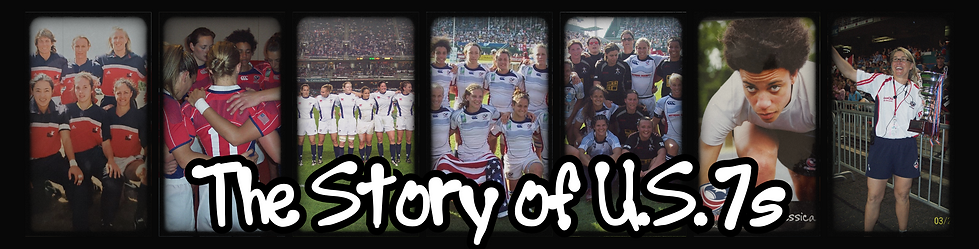


In 2002, the U.S. again fielded a team in the Hong Kong 7s. Coached by Emil Signes, the U.S. women lost a close semi final match to New Zealand and missed the finals. In many ways the 2002 tournament was a turning point as Hong Kong, the largest 7s showcase in the world, was pressed to fully integrate the women into the tournament. The inclusion of elite national women’s teams provided a preview of what Olympic 7s could be.
From 2001 to 2006 Emil Signes coached the USA U-23 Women 7s Team. The U23 team competed against 7s senior All-Star teams.
In 2006, Julie McCoy was named Head Coach of the Women’s National 7s Team, a post she held from 2006-2009 and again 2015-16. Julie, a physician/neurologist by training, brought a wide array of skills and experiences to the position. She had been an Assistant Coach with the Women’s National 15s Team from 2002 through 2004 and with Women’s National 7s Team in 2005. She was the Head Coach of the West 15s and 7s teams from 1999-2001, U.S. Women’s National Team Player 7s in 1998 and the Captain of the Atlantis 7s in 1999.

In 2008, the U.S. Women's 7s Team won the Hong Kong 7s tournament. They would be the first and last U.S. team to win the tournament (men’s or women’s). The team's success at Hong Kong led athlete board member Jenn Joyce to press USAR to increase funding for the 2009 World Cup team.

The first Women's World Cup 7s tournament was held March 6 and 7, 2009 in Dubai. The sixteen team tournament was incorporated into the Men's World Cup 7s tournament.
Australia beat New Zealand 15−10 to win the first women’s World Cup. The U.S. women finished in third place, going 2-1 in pool play and dropping a close match in the semi-final to New Zealand (12-14).

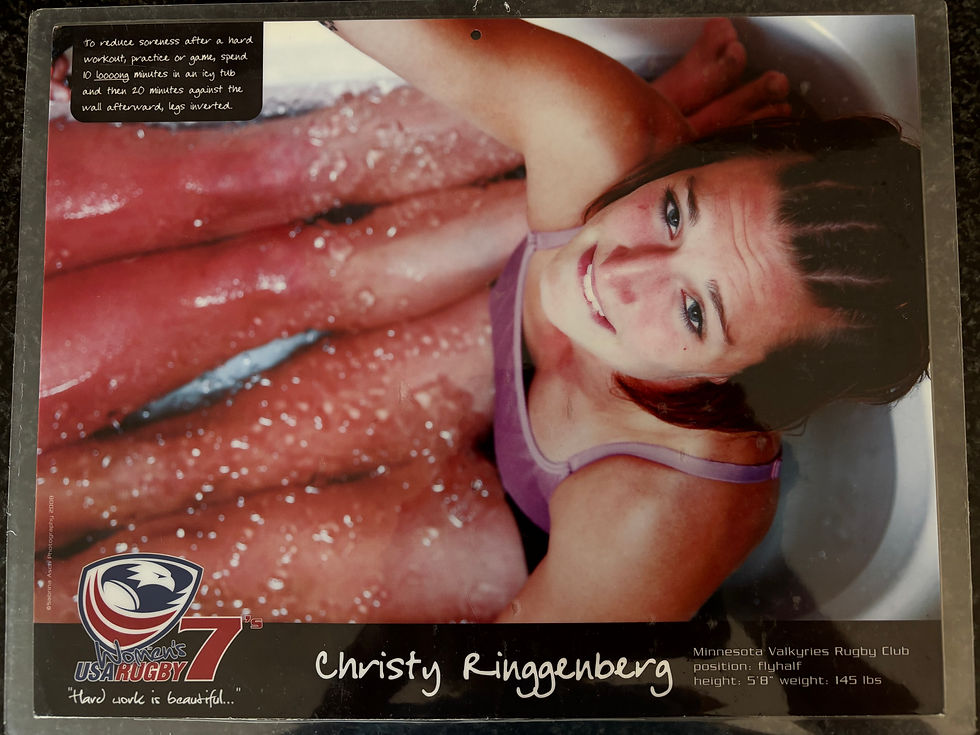


Head Coach Julie McCoy brought some master level fundraising skills to the 2009 U.S. program. As such the 2009 Women’s National 7s team was the first team to fund assistant coaches and players.
I paid myself a daily stipend of $300 a day for days worked out of our budget. I paid my assistant coaches $150 per day (the first time ever assistants were paid for their work). I hosted the first ever month-long residency program in Little Rock, Arkansas, before the World Cup. The players were paid $100 a day for days they worked. Further, the players expenses were covered by our program for previous tours, as well. The model of ‘pay to play’ was eliminated in 2006. There was however, a ‘pay to tryout’ fee which was a cost sharing arrangement (prospects paid $100 per camp).
The funds came from both USAR and private investors arranged by myself. We left $30k in the 7s budget, money that was later used to fund the 2010 15s World Cup team. In addition to raising funds for the World Cup 15s team, I raised funds for Kathy when she was the 15s coach to send the pool of players to Bermuda to play England as a warmup - I did that [fundraising] for about three years.
I fought with USAR constantly for program funding. I remember the entire women’s 7s budget in 2006 was $30,000. I was able to get it up to $300,000 by 2009. In 2009, my private contributor put in writing that his funds wouldn’t be triggered until USAR had contributed the full amount they had promised. In 2012, we were asked to submit a budget for Women’s 7s development and a plan. I was on the USAR board at the time. We flew to Denver to present a plan for $350, 000 per year for five years. USAR responded that we would get $7,000 per year. In essence it was up to me to raise the other $343,000. That’s when I said ‘screw it’; if I have to cover those expenses I want to run a program independent of USAR so ARPTC was born in 2014. I became tired of being told what I could do with the money I was raising. When I left, Nigel (CEO of USAR) contacted Serevi (later rebranded as Atavus) to develop a 7s program. Few folks know that I was offered the Head Coaches position in 2015 and again in 2016 for Tokyo. I was also asked to take over the High Performance Managers role. I was clear I was not interested in that path but as it was offered, when I said ‘no’, USAR had grounds to fire me with cause’. It was ugly, the way coaches were played in those years. The irony was it was all done to save money but by 2016 USAR went bankrupt. I was in such a tough spot. I loved the program and the players, so I decided not to sue or go to the press. (Julie McCoy)


The Women’s Premier League (WPL) was founded in 2009 with the intent of developing a larger player pool for the WNT. The League began with eight clubs: Beantown, Berkeley All Blues, New York Rugby Club, Washington DC Furies, Twin City Amazons, Keystone Rugby Club, Minnesota Valkyries, and Oregon Sports Union (ORSU).
The WPL had been a seed of an idea for many years, but the actual building of the league - the planning, organizing, stewarding, and advocating - was the work of USAR High Performance Director, WNT Coach, and long-time WNT player, Alex Williams. Alex was uniquely positioned to take on the role as she had the respect and access to the communities and people necessary to create the league. It was a remarkable feat and forever changed the landscape of U.S. women’s rugby.

In 2008, I became the Women’s High-Performance Director of USAR. My remit was developing and running all the women’s national team programs. I was not charged with any domestic competition structure. That said, I intended to do what I could to create a high-level, competitive domestic league for women – an idea that many of us had been discussing for years. After I started the job, I researched the various men’s elite domestic leagues that had failed over the years (Anne Barry was a great help; she held so much institutional knowledge!). I started drafting a document that captured the elements I felt would be required for a successful elite women’s league. (Alex Williams)
Some of those key elements:
· The highest quality competition possible. The top teams in the country, regardless of geographic location
· An even competitive schedule (ideally, all teams play all other teams during the league season, although we ended up with a seed-based divisional structure)
· An even financial burden for all teams (account for vastly differing travel expenses)
· The league had to be a cooperative venture, meaning all participating teams had to have equal voices and had to come to agreement on all the major league rules & requirements (this is where a lot of the men’s leagues failed, they could never all get on the same page, and were unwilling to compromise). I felt it was vital for all WPL teams to have the opportunity to discuss/debate/argue and ultimately come to an agreement on the major elements of how the league would operate, and to this day, I believe that requirement is a big part of why the league lasted as it did.
· We had to have a mechanism for promotion and relegation, to ensure the level of competition remained as high as possible and that teams not originally in the league could ‘ascend up’ based on performance
I met with Kathy Flores, a close friend and, at the time, Head Coach of the Women’s National Team. Kath was completely on board and gave suggestions about the things she felt were most important from the perspective of the national team. We worked it out that she would take on the important role of conveying to prospective teams how vital a competitive domestic league would be in the development of elite caliber players – potential WNT players - while also ensuring other divisions, her scouting for WNT players would include them. She also sat on the first Governing Council. Her presence helped get people on board who were not initially supportive of the league. Kath was a vital piece of getting the WPL off the ground.
I met with Dan Payne, who was at that time USAR’s Director of Competition, and told him I was working on putting together a new, elite level women’s domestic league that would sit above the current D1 structure and while using some USAR resources would be a self-governed league, not a USA Rugby governed league. Dan was fully supportive.
I met with Richard Every, who ran USA Rugby’s elite referee development and assignment program. I explained what the league would look like and that we would require National Panel/A-Panel referees for the matches, with the league paying their travel. I felt it important that WPL athletes be refereed in the style and to the level of the international game. He was fully supportive and was a terrific partner to the league. I told him that all matches had to be videotaped (to specific quality requirements) and the video uploaded within a specified short time frame after the match, so that all teams would have equal access to all match video for self- and opponent assessment purposes. He was thrilled with that, as it allowed him to review the performances of the referees he assigned to the matches and again, he was terrific - every week he watched all four matches and not only used them as assessment and training opportunities for his referees but also sent out his assessment of each match and referee performance to the head coaches and invited dialogue with the coaches about how the referees were performing and the things Richard was seeing from the teams that coaches might think about adjusting to better align with the way the referees were managing the games (e.g. to an International standard).
Once I had those background pieces in place, Kath and I called a meeting at the next USAR Club Nationals. We presented it as a request for all teams to attend a meeting with the USAR Women’s High-Performance Director and the WNT Head Coach to discuss a proposal for a new, high-performance domestic league, the WPL. We had a good response, and most of the teams across the divisions at Nationals sent someone to the meeting. We knew there would be opposition, so we were as careful as possible to present it as an opportunity to support the WNT by raising the overall level of domestic play, to emphasize the cooperative nature of the league, and to be clear that there would be a promotion/relegation mechanism. The overall response was positive, though there were people/teams worried that the WPL would destroy women’s club rugby. We continued to battle that concern through the league's first years, though the opportunity for top D1 teams to challenge for promotion to the WPL was a critical positive step.
I then drafted an initial League Agreement which covered the league structure, governance, requirements for inclusion, etc., and worked out a mathematical means of determining the inaugural top eight teams from the results of Nationals over the past several years. I sent a formal invitation to eight teams to join the new WPL. One of the teams declined to participate and we moved up the number nine team from the mathematical standings determination.
Then we did a lot of work to get all eight teams on board with the League Agreement. This was one of the key requirements that I insisted on - every year, every team had to have the opportunity to discuss and debate everything in the very detailed League Agreement until agreement was reached. We achieved this by holding a mandatory full-day League Meeting the day after the WPL Championships each year. This was an effective way of hashing out details and getting every team on the same page every year.
The League Agreement covered every detail I could think of that would help to ensure we achieved our goals:
· Governance structure: a Governing Council with 3 reps elected from among the 8 teams and a USAR representative (initially me, as Chair)
o The GC had regular calls to ensure the league was progressing as planned
o For the first 2 years, Dre Khoury (of the DC Furies) and I did the bulk of the week-to-week work of running the league, it was hours of work every week, sorting out all the issues that arose and putting out fires. Dre was phenomenal and she took over that role when I stepped away.
· Highest possible level of competition
· International caliber referees
· Trained Assistant Referees and a dedicated (and trained) #4 per match (supplied by the home team)
· Requirements for size and quality of match pitches
· Requirements for detailed, standardized match report submissions, including rosters and disciplinary actions
· Requirements for athlete eligibility
· Requirements for videotaping matches to specific quality parameters and uploading to a specified platform by a specified deadline
· Implementation of a promotion/relegation mechanism starting in Year 2
· Every team to have equal decision-making power regarding league requirements
· Mandatory attendance at the annual league meeting
· Teams were required to annually sign a League Agreement by specified deadline and pay an annual league fee
· The tracking of travel expenses for a designated number of rostered athletes and coaches, with the intent to implement cost sharing to offset the different travel schedules
· Teams were required to host each other to keep costs down (if hosting was requested), so we included hosting guidelines to try to ensure provision of reasonable sleeping and eating experiences
Financial Commitment:
· Required League Fee announced months in advance and to be paid when the League Agreement was signed
· Covered all travel expenses for referees (since they were National Panel, they flew from all over)
· Covered all WPL Championship expenses, including the Annual Meeting
We always intended to find league sponsors, but struggled with that goal in the first few years
The teams made some changes in the first few years, underscoring the goal that all participating teams have equal say in determining how the league would operate each year. Managing the many WPL requirements was a beast for each participating team. The teams did a great job sorting out how to manage everything that had to be done to participate in the league, much of which they likely had not had to manage before, or at least not to the WPL's level of specificity and excellence. For many teams, this included a significant increase in fundraising, to help cover the increased cost to participate in the WPL. It took the combined efforts and work of all those people on every team to complete that first year, and then to keep it going year after year. I’m in awe of the many people who kept the WPL going for so long. I’m also proud of the part I played in getting it off the ground.


In 2000 John Klein became Head Coach of the Divine Savior Holy Angels High School rugby team. Under his leadership the DSHA rugby team won 15 consecutive Midwest championships,14 state championships (Wisconsin), and 7 national high school championships. Divine Savior won the national title 2004 through 2009 and was runner up 2000-2001. Phew. In 2008, Sebastian River High School in Florida established the first girls varsity program.


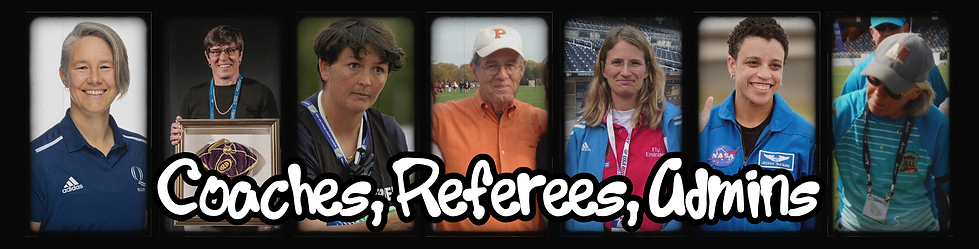


Becky Carlson :
In 2010, Becky Carlson became the first female D1 women's NCAA Rugby coach when she assumed the reins at Quinnipiac University. Quinnipiac was the first NCAA D1 program to be started from scratch (with no club team to elevate). Becky is one of the founders of NIRA and architect of the NCAA women’s rugby initiative. She went on to win three consecutive D1 NIRA/NCAA D1 Championships at Quinnipiac (2015, 2016 and 2017). From 2016-2020, Becky was the NIRA Coaches Chair. From 2000-2003, Becky was a flanker/center at Eastern Illinois University, the first NCAA Women's Rugby Program in the USA. From 2004-2006 she served as an assistant coach at Eastern Illinois before taking over as manager of
the USAR Emerging Sports Initiative. She is the founder of the Fearless Coach blog, a critical tool for women coaches. She is a 2024 graduate of Tulane University School of Law.
Patty Jervey :
In 2006, Patty became the first player, man or woman, to play in five World Cups ((’91, 94’ 98’ ‘02 and ’06). In her last World Cup appearance she was 42. As a wing and center, (1989-2006) she earned 40 caps and was the All-time leading scorer for the U.S. Women’s National Team. In 2008 she received the Distinguished Service Award from The American Sports and Arts Museum and Archives. In 2014, she was the first woman Inducted into the World Rugby Hall of Fame. In 2015 she was inducted in the US Rugby Hall of Fame. After her international career Patty returned to her club roots leading the Atlanta Harlequins to a national championship in

2012 at age 48 and a 4th place in the Women’s Premier League at 50, in 2014.

MaryBeth Mathews :
Marybeth’s rugby career spans from 1976 to the present. A versatile player (fullback, flyhalf, wing, and #8) she co-founded the Portland Maine women’s club. She was a part of Beantown’s inaugural team (1976) She played for Portland from 1977-1986, winning the first National Club Championship in 1977. She returned to Beantown in 1988 winning two National Club Championships. From 1988-1992 Marybeth was a member of the USA Rugby East ITT’s team. But Marybeth is most well known for her coaching expertise. In 1994 she assumed the reins at Bowdoin College. She coached the team from
1994-2023 (9 years club, 20 years as a varsity program). She was the U23 Coach for Maine from 2003-2012, the NERFU U23 Women Head Coach from 2007-2012, the NRU U23 assistant coach from 2010-2013). In 2012, Marybeth was the president of ACRA (American Collegiate Rugby Association), she was instrumental in the formation and stability of NIRA. In 2012 she founded the Polar Bear Rugby Camp, the first and only camp exclusively for girls. In 2023 she was awarded a Lifetime Achievement Award from the USWRF. She is currently a board member of USWRF and the Portland Rugby Football Club.
Anne McClain, Lieutenant Colonel USMC :
Anne McClain was a member of the U.S. Women’s National Team from 2004-2006 and again 2010-2012. A hooker, Anne, played for the US Military Academy from 1998-2002, Clifton Rugby Club from 2002-2004, the Atlanta Harlequins and the Seattle Rugby Club. She was the captain of USA Rugby South Women’s XV All-Stars (2009 to 2011), Coach for USA Rugby South (2012)and an assistant coach for USA Rugby's Women's All-Star Team. Anne played in the Women's Premiership. Her U.S. Army commitments prevented her participation in the 2006 Women's Rugby World Cup. Most notably

in 2013, Anne was selected by NASA as part of Astronaut Group 21, becoming the youngest astronaut on the NASA roster, at age 34. In 2018 she was selected as an Astronaut and Flight Engineer on the International Space Station. She completed two spacewalks totaling 13 hours and 8 minutes, A decorated combat veteran, Anne has a Bronze Star Medal, Air Medal with Valor, two Air Medals, two Army Commendation Medals, two Army Achievement Medals, the Iraqi Campaign Medal with two Service Stars, Global War on Terrorism Service Medal, and three Overseas Service Ribbons. Medals include the Combat Action Badge, Senior Aviator Badge, and Air Assault Badge. Most recently, Anne launched as commander of NASA's SpaceX Crew-10 mission on March 14, 2025, to conduct research, technology demonstrations, and maintenance activities aboard the microgravity laboratory.

Julie McCoy :
In 2006, Julie McCoy was named Head Coach of the U.S. Women’s National 7s Team, a post she held from 2006-2009 and again in 2015-2016. Julie, a Physician and Neurologist by training, brought a wide array of skills and experiences to the position. She had been an Assistant Coach with the Women’s National Team 15s from 2002 through 2004 and with Women’s National Team 7s in 2005. She was the Head Coach of the West 15s and 7s teams from 1999-2001, US Women’s National Team Player 7s in 1998 and the Captain of the Atlantis 7s in 1999. In 2008, she coached the U.S. Women's 7s Team to victory in the Hong Kong 7s tournament. They would be the first and last U.S. team to win the tournament (men’s or women’s).
The team's success at Hong Kong led athlete board member Jenn Joyce to press USAR to increase funding for the 2009 World Cup team and was a critical stepping stone to rugby’s elevation to the 2016 Olympics. A center and flanker, Julie played with the New Orleans Half Moons, Little Rock Women’s, 7s and 15s, West Territory Allstar 15s and 7s, Atlantis, and the U.S. Women’s National 7s team. In 2014 Julie and Tania Hahn, founded American Rugby Pro Training Center (ARPTC) ARPTC was staffed largely by female coaches and sought to expand pathways for girls and women. ARPTC also focused on grassroots rugby by offering summer residency programs for high school players and coaching development. Few people understand or appreciate the tremendous financial and personal investment Julie made - investments that transformed USAR 7s from a ‘pay to play model’ to an elite, high performance model.
Emil Signes :
While a successful 15s coach for over thirty years, Emil is synonymous with U.S. 7s. In 1986 he founded Atlantis Rugby and began laying the foundation for international women’s 7s. The extent of his 7s coaching is mind boggling. Between 1986 and mid-2014 Atlantis – men, women, boys, girls – fielded 206 squads at 145 tournaments in 31 different countries. Between 7s and 15s, men and women, club and All-Star, his teams have won 14 national championships. (Wendy Young, 2014, Scrumhalf Connection. As Alex Goff noted, Rugby would not be Olympic sport without the women, and women would not have an international 7s presence were it not for one man – Emil Signes. (Alex Goff, Rugby Magazine, 2009) Emil essentially grew the women's 7s game worldwide.

It started by taking a U.S. Women's 7s team across the globe-- first becoming Champions internationally in Benidorm Spain (1992). Pretty much after that Emil would ring me and say, " Hey, do you think we could get the women together to go to Hong Kong, Brazil, Ireland, Thailand, Borneo, Cuba, Spain, Trinidad and Tobago--just to name a few. He would cajole tournament organizers, inspire players, organize tours, and coach both the U.S.
Women's 7s AND 15s team. While he was always giving us a lesson -- thus nicknames like 'the Professor' and 'the Emperor', he was also listening. Every player that interacted with Emil felt truly valued and will forever remember their experience. The role call of players that he has impacted in the U.S. women's rugby community at every level is unparalleled. (Krista McFarren)

Dana Teagarden :
In 2009 Dana Teagarden was the first female to referee at an iRB Sevens World Series Tournament when she was selected to 7s Women’s World Cup panel in Dubai. In 2010 she was selected to the Women’s Rugby World Cup Referee Panel. In 2010 she refereed the international test match between the Netherlands and Hong Kong - the first woman to referee a senior men’s 15s international match. Dana refereed 3 World Cups (2006, 2009, 2010), the Women’s Six Nations, and 23 test matches from 2006 to 2014. A formidable flyhalf and center, Dana played for the Air Force Academy, Florida State University, Las Vegas, and the U.S. Women’s National Team. In 1991 as a member of the Air Force
Academy, she won the first women’s collegiate national championship team and was selected as co-MVP of the tournament. She is currently a member, International Rugby Board’s panel of referees.
Jessica Watkins :
In 2009, Jess Watkins was a member of the 2009 Women’s World Cup 7s team. At only 21 years old she was the leading scorer for the US and was voted the ‘fastest woman in rugby’. She won the 2008 D1 National Championship with Stanford University and made her first U.S. National 7s team. She was a First Team Collegiate Rugby All-American from 2008-2010. She earned a Ph.D. in Geology at the University of California, Los Angeles and was a postdoctoral fellow at the California Institute of Technology, where she was also an assistant coach to the women's basketball team. In June 2017, Watkins was selected as a member of NASA Astronaut Group 22. In 2019, Jess was an Aquanaut with an All-female

research team for NASA Extreme Environment Mission Operations (ocean floor research). In 2021 she was the first Black woman to be assigned a mission to the international Space Station. In April 2022 with her fellow SpaceX Crew-4 astronauts launched on a six-month journey to the International Space Station returning in October of 2022.

Alex Williams :
In 2018, Alex Williams was only the fourth woman inducted into the US Rugby Hall of Fame. Alex was a member of five World Cup teams, three as a player (1994, 1998, 2002) and two as an assistant coach (2006, 2010). She was part of nine national Championships, five as a player, four as a coach. She was the MVP of the 1996 and 2002 D1 National Club Championships. In 2004 Alex retired as the second most capped US woman. She began her career at Radcliffe/Harvard in 1988. She played for Beantown from 1991-2000, the Berkeley All Blues from 2001-2004. She was selected to the New England All-Stars, East Coast All-Stars, Northeast All-Stars and the Pacific Coast Grizzlies. She was an assistant coach for the
Northeast Select Side, Berkeley All-Blues, San Diego Surfers. She was Head Coach of the Berkeley All Blues, and the Pacific Coast Grizzlies. She was the U.S. WNT forwards coach. She was also the U.S. Rugby Women’s High Performance Manager from 2008-2012, Co-founder and architect of the Women’s Premier League (WPL), founder and member of Governing Council 2009-2012, USAR Director (2004-2006), a member of the USAR Congress (2006-2008), USAR Women’s Competition Committee, and Collegiate Management Council, as well as the Executive Director of Southern California Youth Rugby (2013-2018).


